
Cutting Room Template

The Newspapers 1800 to 1850 were the lifeblood of early American communities, their hand press printing shaping the rhythm of towns and cities across the young republic. Printers and typesetters carried the weight of early American newspaper history on their shoulders, meticulously arranging letters by hand through a manual typesetting process that demanded skill, patience, and precision. Each sheet that emerged from the historical printing press, crafted in the manner of old newspaper production, bore the careful labor of those who understood that every word mattered, their work still echoing the legacy of the Gutenberg press, that every article carried news, debate, and the very voice of the nation.
The Pressroom Before Dawn
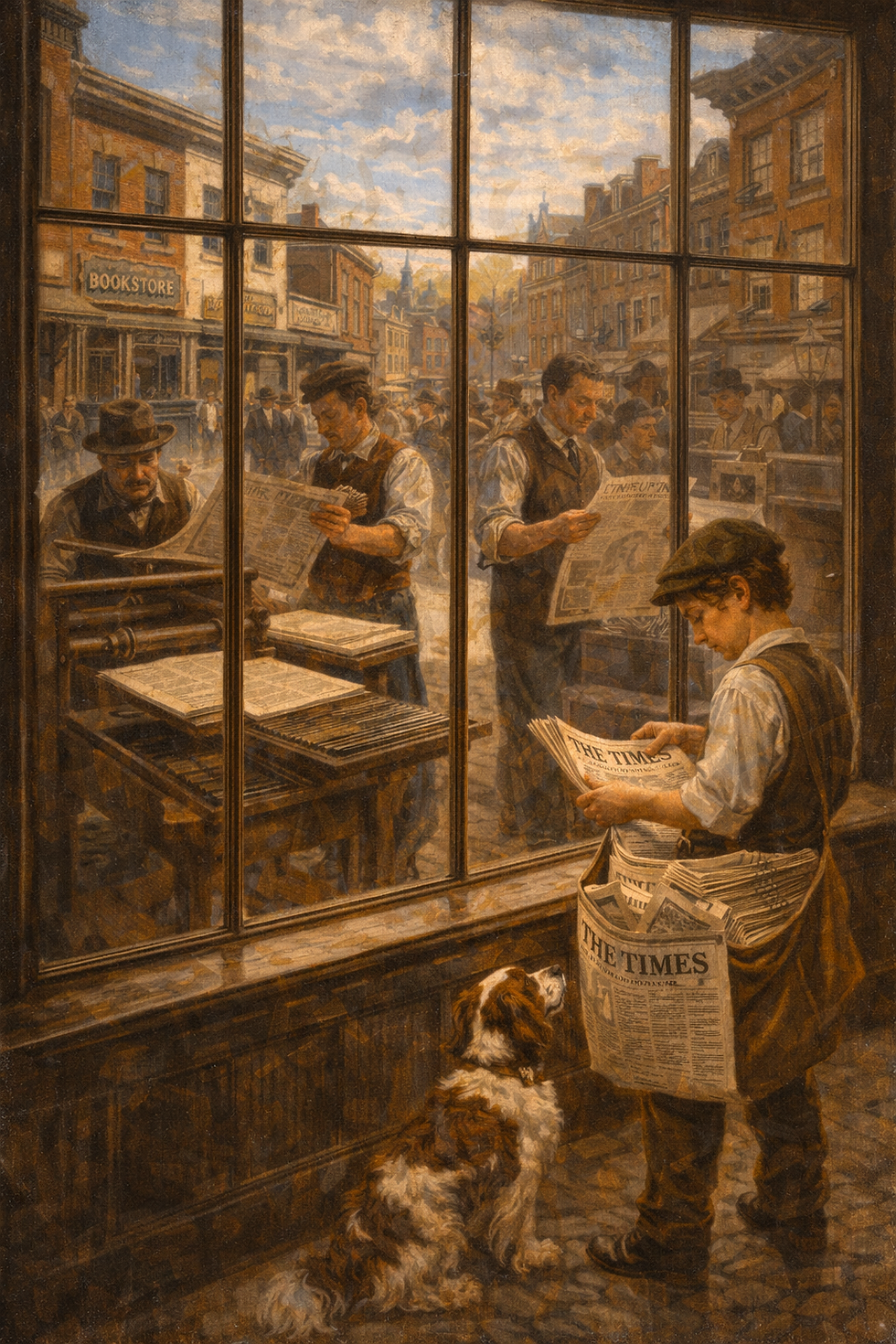
In the dim light of a print shop, the clatter of wooden type cases and the scent of lamp oil and hot lead marked the start of the day. Apprentices moved between compositing tables in early pressrooms, plucking letters from compartments and arranging them in reverse to form lines of type ready for printing. Every page was a testament to the skill and devotion of printers and typesetters, whose hands shaped the voice of towns and the conscience of a young republic.
The Dance of Type and Ink
Printing was a ritual of discipline and rhythm, the daily choreography of 19th century journalism. Compositors, aprons darkened by ink, tapped lines of type into galley trays, careful to maintain spacing and alignment—a delicate art echoing the traditions of letterpress history. When a page was locked tight, the press groaned under the strain of a wooden lever, each pull requiring strength, precision, and coordination.
Each pull of the press demanded careful teamwork. Apprentices passed paper, oiled plates, and wiped excess ink in time with the press, which hissed and labored under effort. Hours of work produced a single copy, every word set by hand in the old manner of type setting by hand, each page a reflection of meticulous craftsmanship.
The press became an extension of the printer’s intent, translating the labor of hand-set type into a public voice. Every sheet carried the mark of the pressroom, bearing news, debate, and ideas essential to civic life—quiet proof of the printing trade in 1800s that shaped communities.
The Voice of the Republic
Between 1800 and 1850, Newspapers 1800 to 1850 multiplied, each community asserting its identity through its own publication. Editors debated politics and philosophy—Federalist or Whig, Democrat or Abolitionist—each column carrying influence and authority. The printed word was a powerful instrument, guiding citizens in the decisions of a young democracy.
Printers and typesetters and editors were interpreters of the public will. Their presses spoke louder than speeches in town squares, shaping the moral, political, and cultural landscape of the era. Citizens looked to newspapers for guidance, scrutiny, and reflection, and in their hands, the young nation found its voice.
The Enduring Craft
The craft of early printers defined the period. In a time when information was scarce and the republic still forming, Newspapers 1800 to 1850 and the men who produced them were essential. Their presses carried news, debate, and ideas to every reader able to engage with the printed word. The devotion of printers and typesetters ensured that communities remained informed and connected, making their labor indispensable to the character and progress of the United States during the first half of the nineteenth century.

Comments